


The Real Competitor Isn’t Another Financial Institution
The greatest threat to your financial institution may not be a banking charter, a branch network, or even a banking license. It may simply be a financial institution that is easier to do business with. Today’s financial institutions are competing against convenience.
For years, banks and credit unions have measured themselves against the banks and credit unions across town. They tracked the regional bank entering the market, the credit union opening a new branch, or the competitor advertising a slightly better CD or loan rate. While those factors still matter, they are no longer the primary force shaping growth. The real competitor today is convenience.
Every day consumers order products from Amazon with a single click. They have meals delivered through DoorDash, pay with digital wallets, order cars sight unseen in their pajamas, and deposit checks from their phones. These experiences have quietly redefined expectations across every industry, including financial services.
The question is no longer, “Who offers the best rate?” Increasingly, it is, “Who is easiest to do business with?”
Accessibility Is the New Competitive Advantage
Many financial institutions still view branch strategy as a choice between physical and digital delivery. Consumers do not. Consumers think in terms of access.
They want to open an account online, receive expert guidance from a live person and not AI when needed, and solve problems quickly to maximize their day. They expect financial services to fit into their lives rather than forcing them to adapt to traditional banking models.
Research published in 2026 found that most consumers continue to prefer a hybrid banking experience that combines digital convenience with access to knowledgeable professionals when important financial decisions arise. At the same time, industry leaders are increasingly investing in branch formats that support accessibility rather than simply increasing square footage.
The institutions gaining market share are not abandoning branches. They are reimagining them.
Why Physical Presence Still Matters
If branches no longer mattered, some of the nation’s largest financial institutions would be shrinking their physical footprint. Instead, they are expanding it. In early 2026, JPMorgan Chase announced plans to open more than 160 branches across over 30 states, focusing heavily on communities where customer demand is growing and financial access remains limited. The strategy is not based on nostalgia. It is based on proximity.
Relationships still matter. Trust still matters. Advice still matters. The institutions that thrive over the next decade will not necessarily have the most locations. They will have the most accessible locations.
That may be an in-store branch serving thousands of weekly shoppers. It may be a cashless advisory branch located in a growing mixed-use development. It may be a compact storefront branch positioned closer to where people live and work.
The common denominator is not branch size. It is customer access.
Meeting People Where They Already Are
Some of the most successful branch strategies today begin with a simple question: “Where do our future members already spend their time?”
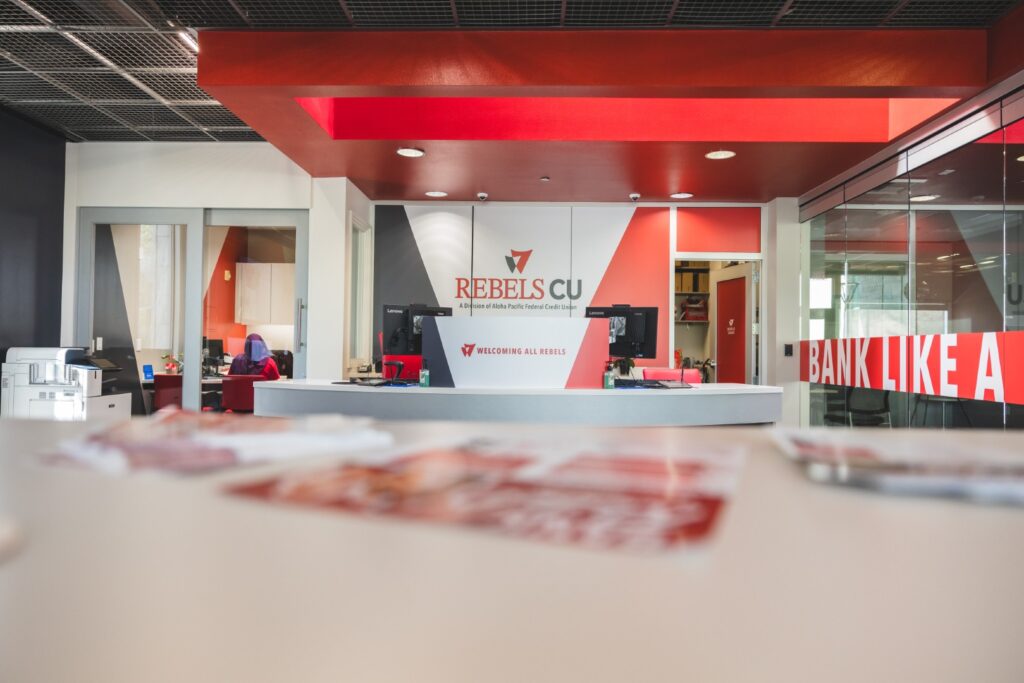
Aloha Pacific Federal Credit Union, the third largest credit union in HI, answered that question by opening an onsite branch within the Financial Literacy Center at the University of Nevada, Las Vegas. The strategy was not simply about serving Hawaii residents attending school on the mainland. It was about creating a partnership with the university that helps educate the next generation through financial literacy while building meaningful relationships early in life.
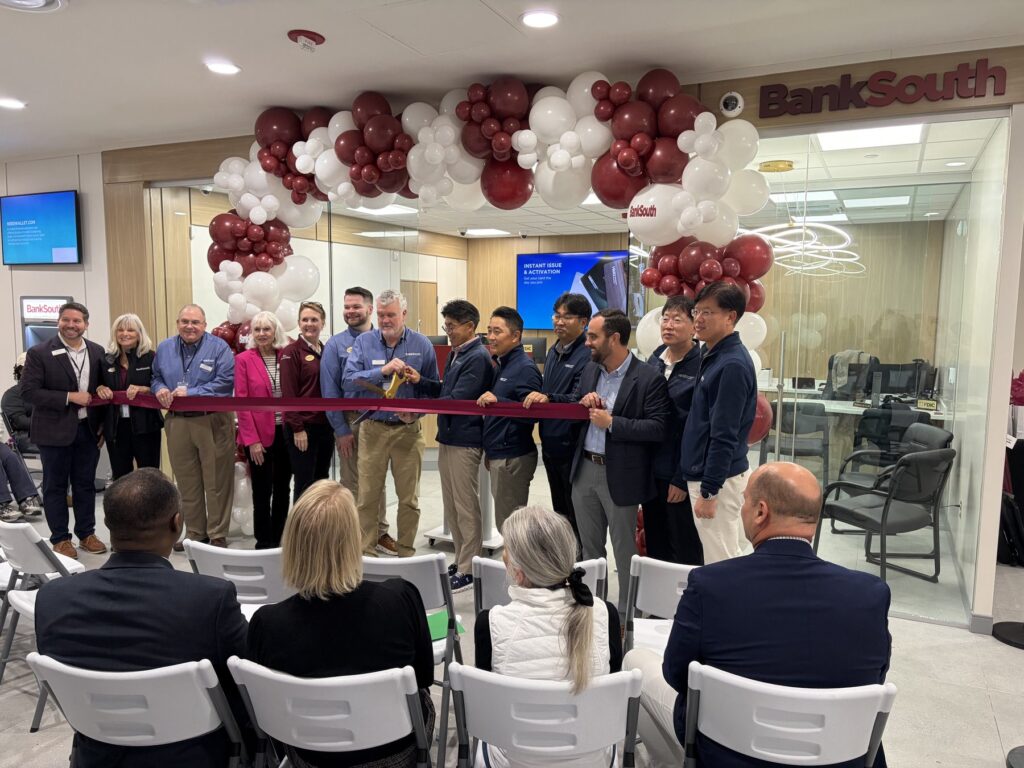
The $1.6 billion dollar BankSouth out of Greensboro, GA took a similar approach through its ‘Bank At Work’ strategy. Rather than waiting for employees to visit a traditional branch, the bank established a branch inside Hyundai’s manufacturing facility in South Georgia. The facility currently serves approximately 4,000 workers and is expected to support more than 12,000 jobs in the coming years. Beyond banking services, BankSouth participates in employee orientation programs, financial education initiatives, lending opportunities, and mortgage discussions directly within the workplace.
Neither financial institution was focused on building another branch. They were focused on competing against convenience by removing the distance between people and financial guidance. That distinction matters.
Banking the Next Generation
Gen Z and younger Millennials have never experienced a world without instant access. They expect digital convenience, mobile functionality, and information on demand. Yet many still seek human guidance when purchasing a home, financing a vehicle, managing debt, building wealth, or planning for the future.
This creates a significant opportunity for financial institutions. The choice is not between digital banking and physical locations. The choice is between being accessible and being difficult to reach.
Forward-thinking institutions recognize that younger consumers often begin relationships digitally but strengthen those relationships through personal interaction. Strategic branch placement when competing against convenience, supported by strong technology, allows institutions to serve both needs.
The Hidden Cost of Delay
Unfortunately, many institutions underestimate the complexity of expansion. The challenge is not identifying a market opportunity. The challenge is executing quickly enough to capitalize on it.
Market intelligence, site selection, lease negotiations, design development, permitting, approvals, manufacturing, construction coordination, and deployment all introduce opportunities for delay. Every month a project slips creates consequences that rarely appear on a project schedule:
- Prospective members establish relationships elsewhere
- Local visibility is postponed
- Growth initiatives stall
- Market opportunities narrow
Speed-to-market is no longer simply an operational concern. It is a growth strategy. The banks and credit unions that move efficiently and with intention often gain advantages that slower competitors struggle to recover.
A Different Way to Think About Growth
Some of the most promising opportunities today exist in growing communities where population growth is outpacing financial institution presence. Others exist inside grocery stores, universities, hospitals, military installations, manufacturing facilities, and mixed-use developments where people already spend their time.
These locations are not replacing relationship banking. They are extending it. Banks and credit unions gaining momentum are asking a different question than many of their competitors. Instead of asking, “How many branches should we have?” They are asking, “How easy are we to do business with?” That shift changes everything.
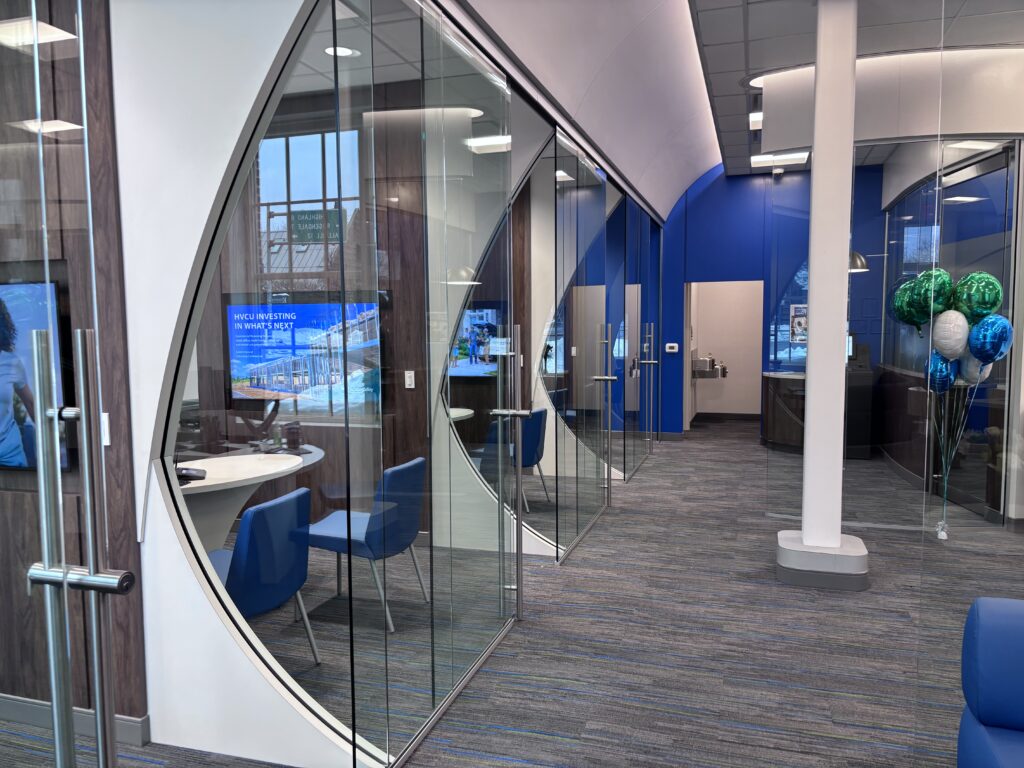
It changes site selection, expansion strategy, and delivery models. Most importantly, it changes how institutions compete. The future of banking is not branch-less, it is accessibility and convenience.
How good is your financial institution at competing against convenience? For financial institutions evaluating expansion opportunities, new delivery models, or growth into emerging markets, partnering with an experienced organization can help accelerate deployment while reducing complexity and execution risk. FSI, with 40+ years under its hefty tool belt, helps bridge the gap between strategy and execution and allows leadership teams to stay focused on serving customers/members while bringing new opportunities to market faster.
Contact us to discuss your branch expansion or remodel strategy today. Put our team to work for you.
SOURCES:
Reuters. “JPMorgan Aims to Open More Than 160 Branches in 2026.” February 2026.
Raisin. “2026 Consumer Banking Trends Research.” 2026.
Independent Banker Magazine. “6 Retail Banking Trends Worth Exploring in 2026.” 2026.

Leave a Reply